Decision Literacy
Thinking clearly and evaluating choices.
Free and open educational curriculum
A free, open curriculum that teaches ages 8–12 how money actually works.
18 weeks of hands-on, discussion-driven lessons — each about 20 minutes per session — designed for classrooms, homeschool families, after-school clubs, and any adult who wants to help kids understand earning, saving, spending, and financial systems through curiosity, not lectures.
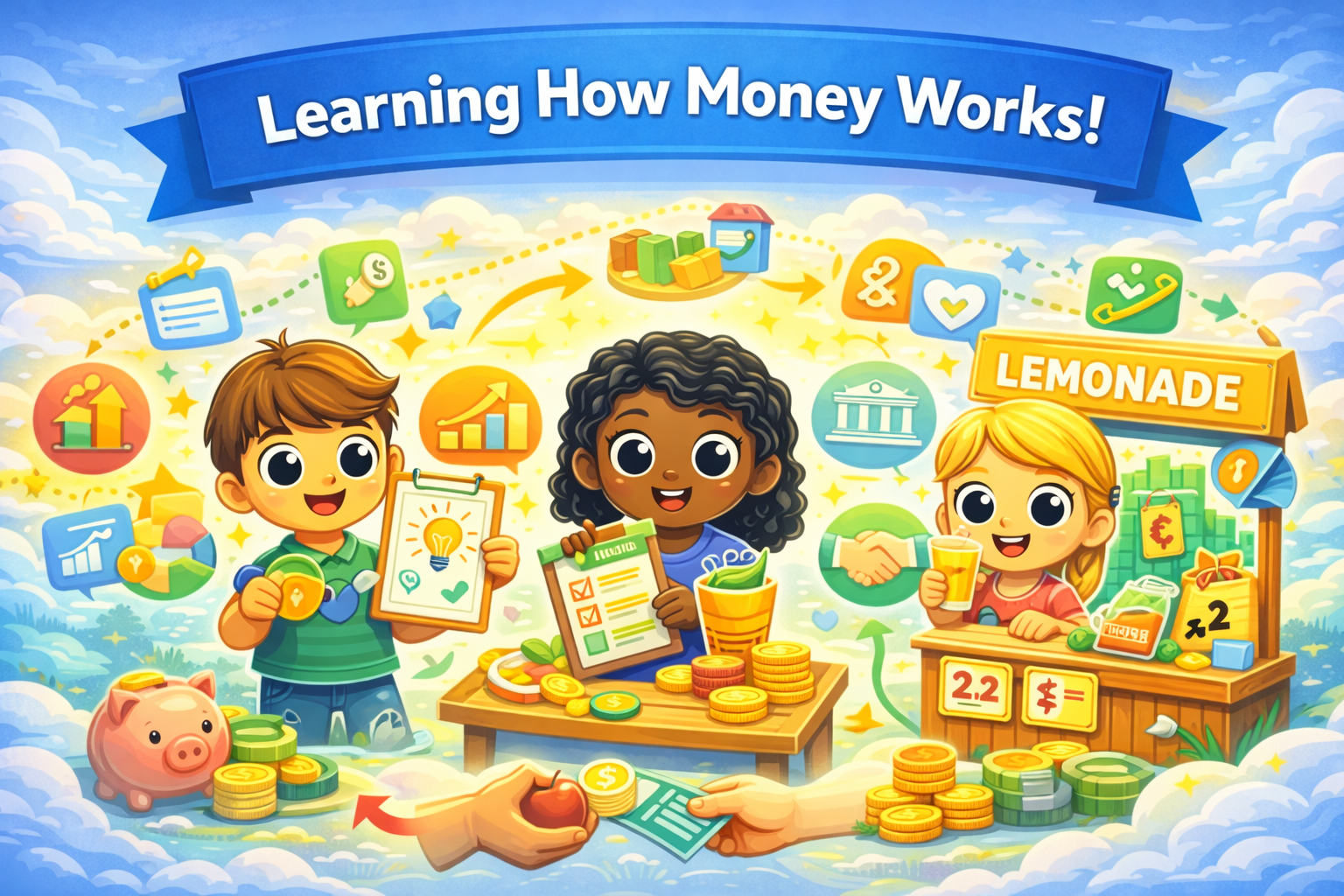
Financial Literacy for Kids is an 18-week curriculum for ages 8–12, built for classroom teachers, homeschool families, caregivers, and after-school leaders. Each week includes three sessions of about 20 minutes each. Students move beyond basic money awareness into real understanding — learning how financial systems work, how to make thoughtful decisions, and how to create value for others.
This curriculum is part of Literacy for Kids, a collection of open-source curricula designed to help children ages 8–12 understand the systems that shape the modern world.
Each curriculum explores a foundational literacy:
Thinking clearly and evaluating choices.
Understanding technology and how computers work.
Understanding information systems and evaluating sources.
Understanding money and financial decisions.
Understanding governance and communities.
The curriculum is organized around a set of core concepts that help students understand money and financial systems in practical, durable ways.
Students discover that value comes from agreement and context — a dollar is worth something because we all agree it is.
Students trace how money moves through systems — from cash to digital wallets — and how friction shapes spending behavior.
Students learn opportunity costs: spending here means you cannot spend there. Budgeting is error handling for life.
Students explore how banks, interest, and inflation create the macro machinery that affects every dollar in circulation.
Students move from understanding money to creating value — identifying problems and designing solutions through entrepreneurship.
The learning progression moves from foundational value mechanics through digital money systems, strategic budgeting, economic systems, and into a capstone entrepreneurship project.
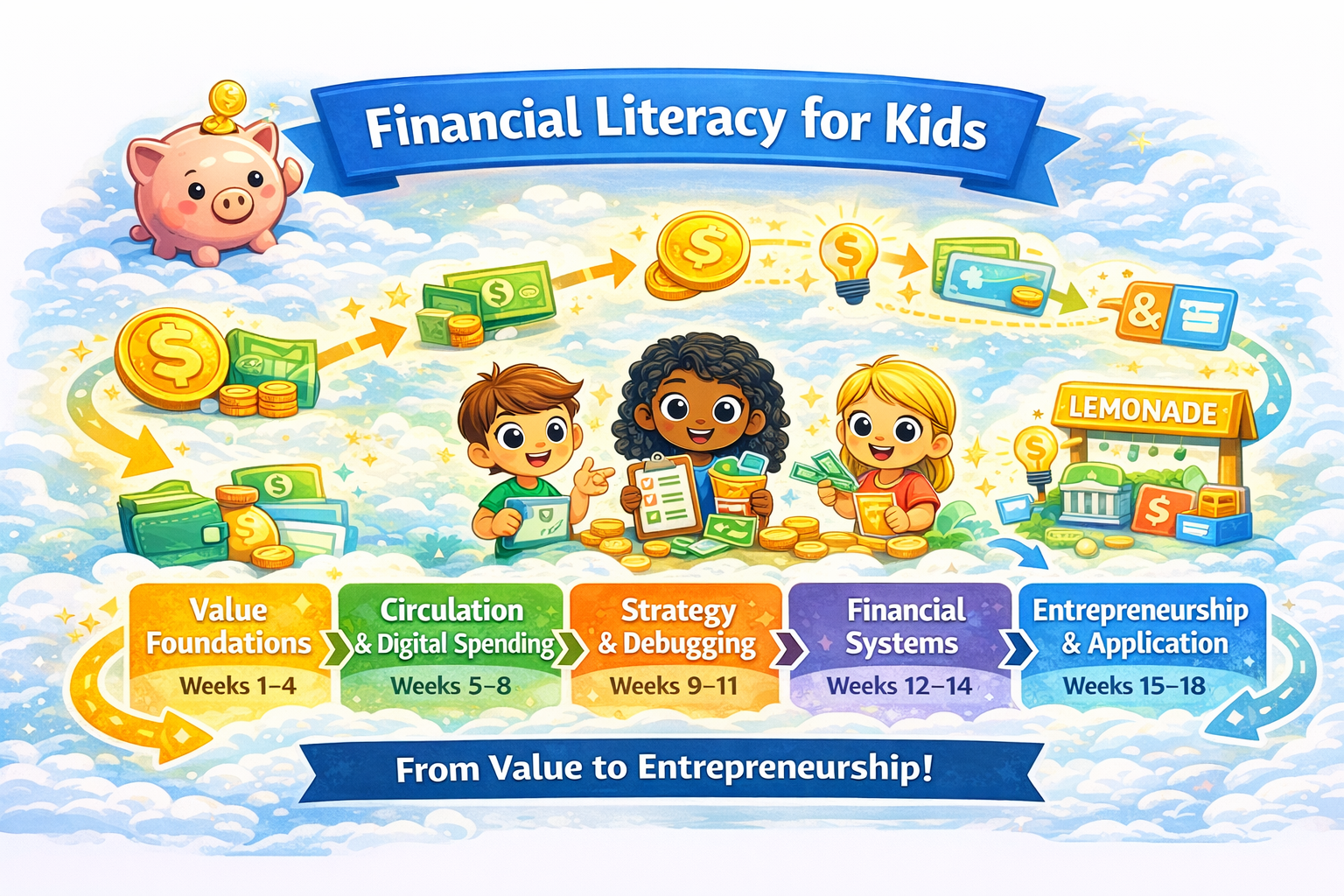
Weeks 1–4
Understanding value, trade and barter, why money exists, and the household economy
Weeks 5–8
How money moves, ways we pay, digital money, and friction and spending
Weeks 9–11
Resource allocation and risk: budgeting, opportunity costs, and emergency funds
Weeks 12–14
Banking, interest, and macro mechanics: how the financial hardware works
Weeks 15–18
Entrepreneurship capstone: identify a problem, design a solution, manage a budget, and present
Begin with the Welcome page for an overview, then jump into Week 1. Each session is about 20 minutes — designed for ages 8–12.
Found a mistake or have a suggestion? Open an issue on GitHub.
Version 1.0
This curriculum is an open project and will continue to improve as teachers and families use it.