Why Rules Exist
Weeks 1–4 explore why humans need agreements, how cooperation scales from families to nations, and what rights and responsibilities really mean.
Free and open educational curriculum
A structured, nonpartisan curriculum for ages 8–12 that teaches kids how communities and government actually work.
Many children grow up in communities without understanding how decisions are made, how laws work, or how they can participate. This curriculum introduces civic ideas through engaging activities that help students explore, question, and participate in the world around them.
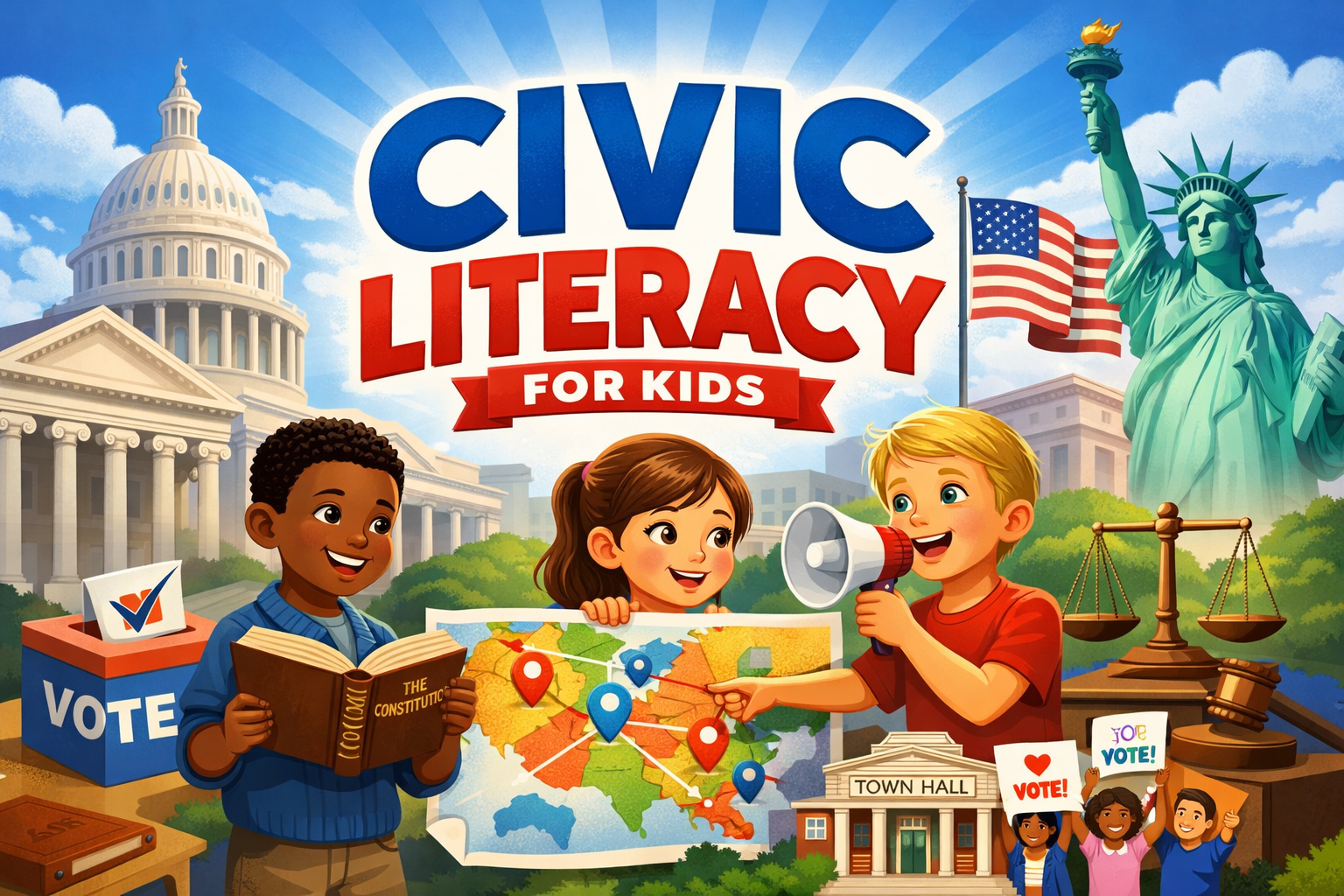
Open-source curricula for children ages 8–12, designed to help kids understand the systems that shape modern life.
Over 18 weeks, students explore five big units — from why communities need rules, to how government works, to solving a real problem in their own neighborhood.
Weeks 1–4 explore why humans need agreements, how cooperation scales from families to nations, and what rights and responsibilities really mean.
Weeks 5–9 cover the Constitution, three branches, how laws are made, checks and balances, and elections.
Weeks 10–12 bring it home — mayors, city councils, public services, budgets, and how to participate in local decisions.
Weeks 13–14 explore diplomacy, trade, treaties, and the global challenges that require countries to work together.
Weeks 15–18 are the capstone — students identify a real community problem, research it, write a proposal, and present it.
An optional 2-week module where students learn how courts work and run their own mock trial.
Every lesson connects to five ideas that build across the course:
Every rule was created to solve a problem. Understanding why helps you evaluate whether it's working.
Members of a community have protections and duties. These two things work together.
In a democracy, authority comes from the consent of the governed. Leaders serve because people choose them.
When power is divided and checked, it's harder for any person or group to act unfairly.
Voting, speaking up, and serving are how citizens keep the system working.
Everything you need is here — 18 weeks of lessons, activities, and projects. No paid materials required.
Found a mistake or have a suggestion? Open an issue on GitHub.
Version 1.0
This curriculum is an open project — free to use, share, and improve.